
Why Does Water Management Matter?
Canine therapists who deliver canine clinical hydrotherapy are hard working individuals.
They have multiple responsibilities including the additional water management of the clinical hydrotherapy suite. This is on top of their normal land based practice duties.
Therapists delivering a clinical hydrotherapy service are directly responsible for maintaining the quality of the water they work in.
This requirement validates their insurance cover, which requires that both the water and clinic is consistently safe and meets professional standards at all time.
Safe practice is paramount and a professional requirement for canine practitioners delivering a clinical hydortherapy service.
From Past to Present
It’s always fascinating to reflect on how far clinical hydrotherapy has come over the past 2 decades. As the fastest-growing sector within the canine healthcare industry for many years, practice today looks very different than in the late 1990s.
Historically, many therapists used to administer treatments from outside the pool or aquatic treadmill. They relied on poles and collars, lowered external harnesses into the water, or simply hung a lead over the edge whilst the dog was left to “get on with it.”
Starting a number of different training programmes in 2003, I demonstrated and taught canine Therapeutic Handling and how to work within the pool or aquatic treadmill with each dog’s consent. This resulted in an astounding reaction to this approach.
Introducing internal pods and platforms under the water level at the time seemed revolutionary and started a real transformation.
I also focused on supporting therapists’ water managment skills for best practice, to empower their decision making skills.
It was established that professional responsibilities and insurance cover deemed the therapist was directly responsible for all therapeutic care in the clinic, including in the water, instead of the centre owner. This was a real gamechanger for therapist delivering a hydrotherapy service.
In the early 2000s, canine hydrotherapy water temperatures was suggested by some to be 24 – 26 degrees!! This was definitely not hydrotherapy as I knew it!
Looking at the evidence both in human hydrotherapy, linked to my canine specialism I reasoned and risk assessed working at temperatures that reflected clinical hydrotherapy and accounted for each dog’s signalment (age, gender, breed and coat colour), physical status and behavioural responses.
This was in contrast to the cold water temperatures proviously utilised and was a much more effective method of therapeutic treatment.
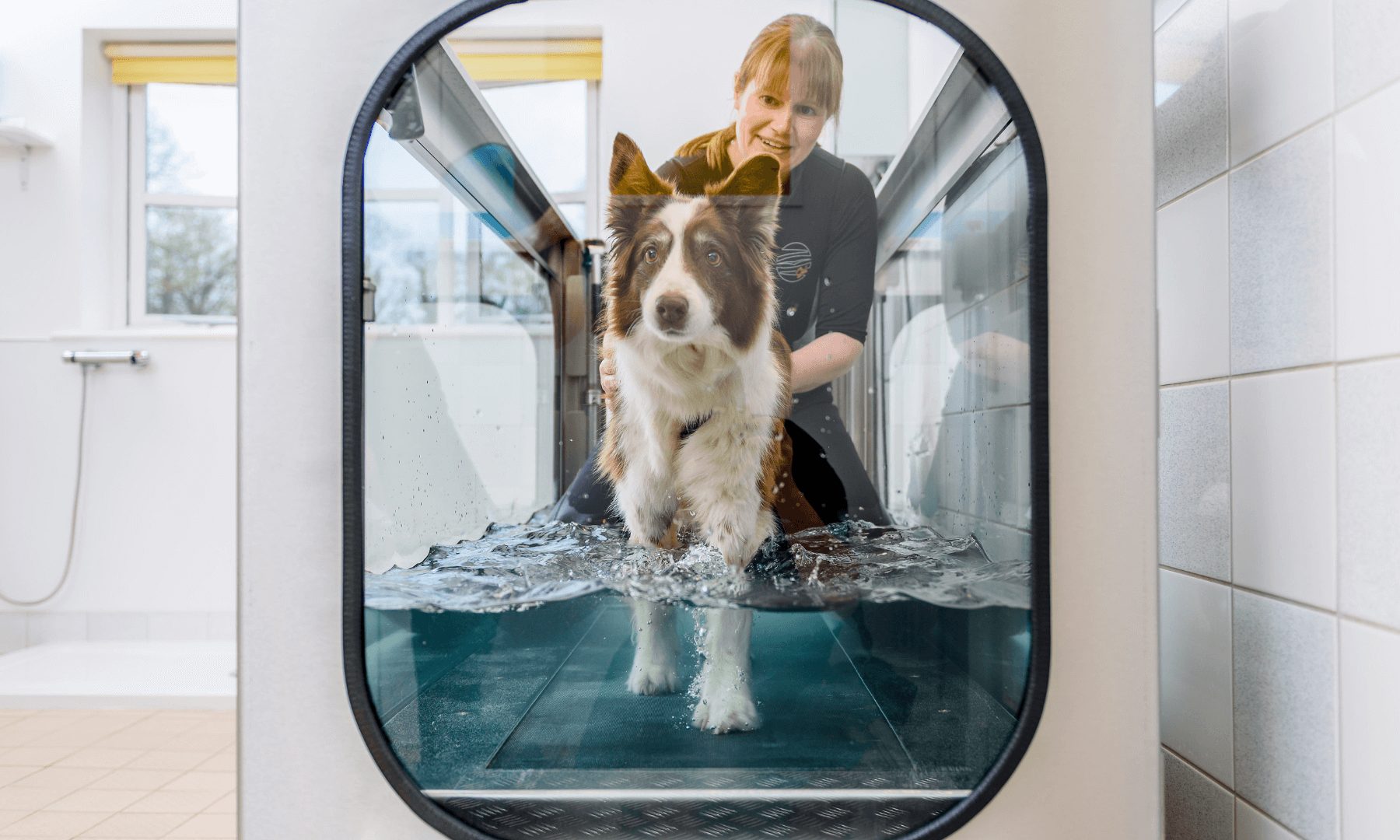
Thankfully, the industry has evolved. Today, canine clinical hydrotherapy is delivered by specifically qualified therapists who remain inside the aquatic environment with the dog.
This allows us to administer a range of clinically reasoned techniques to optimise the dog’s land-based motion, balance, and coordination.
This therapeutic, hands-on approach ensures the effective and safe delivery of the treatment programme for every dog.
Crucially, our modern focus is on working with the dog’s consent rather than using methods of coercion, however well-intentioned they might have been in the past.
This mindful approach is firmly supported by advancements in canine behavioural sciences, canine functional anatomy and treatment techniques.
The Invisible Foundation of Safe Practice
As our clinical skills have advanced, so too have the requirements for canine water management.
Effective water management is the invisible foundation of a safe, hygienic environment. It ensures the water used in our treatments is sanitised and safe, preventing the growth of bacteria, viruses, and other harmful microorganisms.
This approach keeps dogs and therapists safe.
Maintaining this environment requires a robust, proactive approach. Regular water quality testing for chlorine, pH levels, and total dissolved solids (TDS) is only the beginning.
Hydrotherapy facilities must have rigorous disinfection and sanitisation protocols in place, using appropriate water sanitisers, such as chlorine, to actively eliminate harmful pathogens.
However, effective biosecurity extends far beyond the aquatic water itself. Regular, methodical cleaning of all equipment, surrounding surfaces, walls, floors and the internal filtration systems using recommended disinfectants is paramount.
It’s important to note that fresh water systems are not recognised as safe practice in the UK.
Furthermore, maintaining a warm water temperature according to industry guidelines is essential for clinical efficacy; anything under 28 degrees is deemed poor practice.
When we combine precise temperature control with comprehensive disinfection protocols, we can achieve the best possible therapeutic outcomes.
This must always be supported by Clinical Risk Assessments (CRA). A standard Site-Specific Risk Assessment (SSRA) is no longer sufficient on its own due to the high stakes in this speciality. Dynamic Risk Assessments (DRA) are essential and must be recorded for every dog treated.
The Clinical & Professional Benefits
When we prioritise water management, the benefits echo throughout our entire practice.
Most importantly, it guarantees safety as it dramatically reduces the risk of waterborne illnesses. This consistently ensures the wellbeing of the dogs, their owners and the therapists delivering the service.
Beyond safety, optimal water conditions directly enhance the therapeutic effects of the session.
When owners witness this high-quality, safe environment, it builds immense trust and confidence in the therapist.
This satisfaction leads to increased retention rates and highly valuable word-of-mouth recommendations, supporting the sustainability of the hydrotherapy service.
Finally, adhering to these strict guidelines ensures compliance with regulations set by professional associations such as IRVAP – ICH (Institute of Canine Hydrotherapists).
This ongoing commitment protects the health of the dog, while ensuring the therapist meets legal, professional and ethical responsibilities.
Curious to Delve Deeper?
Because water management is so complex and critical to the canine clinical hydrotherapy industry, continuous professional development is essential. This keeps therapists up to date and validates their animal insurance cover.
Therapists wanting to review and advance their practice skills to include complex problem solving strategies can study our in-depth Canine Hydrotherapy Water Management portfolio course.
This certificated CPD course of practical skills to progress current canine clinical hydrotherapy water management is the perfect next step.
Explore this course here if you want to know more on what this study covers.
By ensuring a consistently safe hydrotherapy service for the dogs in your professional care, you are on the leading edge and shaping the future of this industry.
Produced, owned and copyright to Barbara Houlding – K9HS Courses. All Rights Reserved.
Advance Your Clinical Practice
Ready to progress your clinical practice? Join a global community of canine professionals in the K9 Therapy Hub for evidence-based CPD, clinical resources and peer support.