
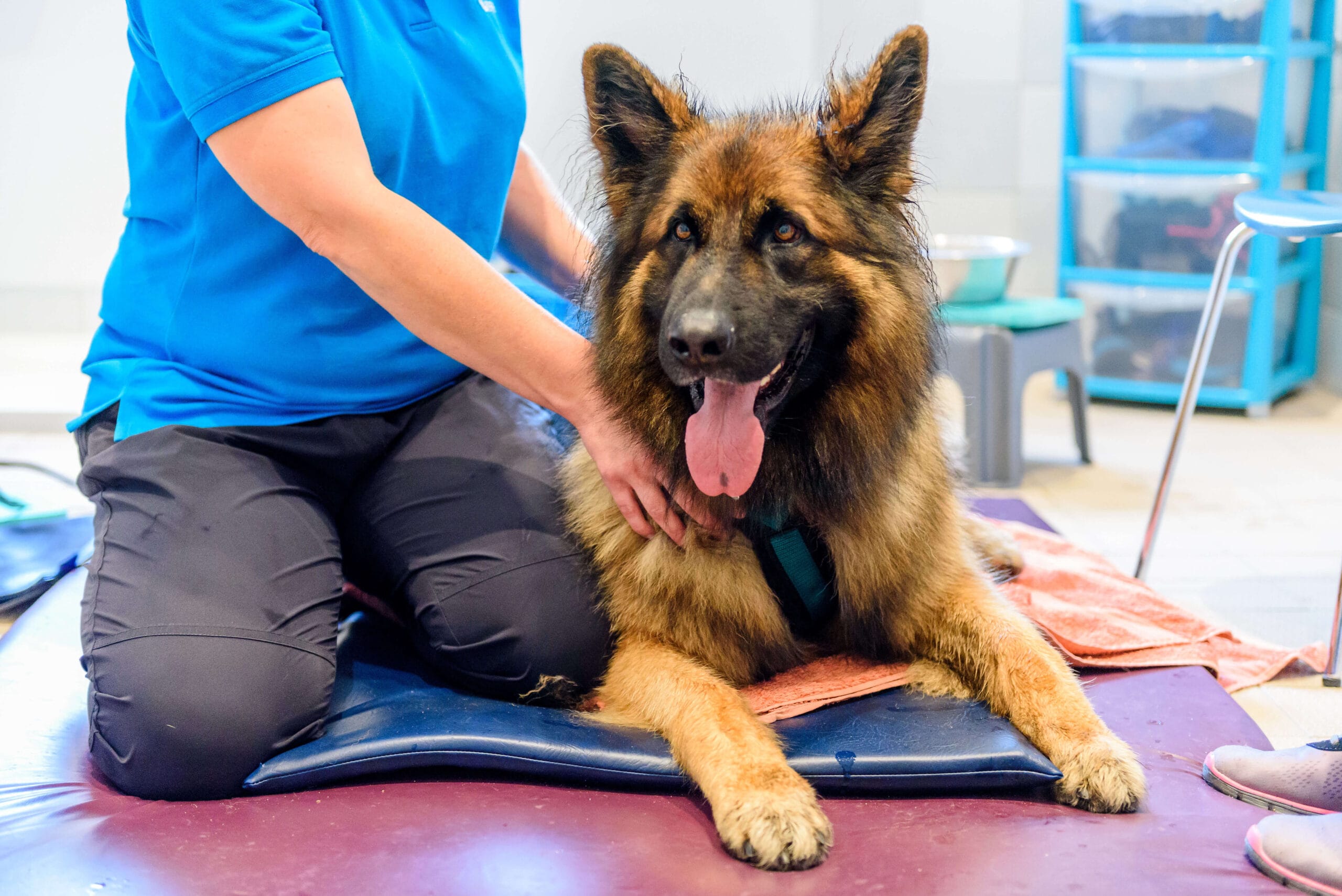
As canine therapists, the assessment process is the foundation of our clinical reasoning.
When a human patient is admitted to a hospital, medical staff do not rely on a single measurement. They take a range of vital signs, such as pulse, temperature, and blood pressure, alongside a subjective assessment. Then they may conduct further tests as needed to build a clear picture of the patient’s overall health status.
The exact same principle applies to our canine patients. Relying on a single observation is simply not enough. To gain a complete and accurate perspective of each dog’s physiological state, therapists must use a range of different, overlapping health checks.
This principle applies to every dog we see, whether you are working with athletic dogs for fitness and conditioning or managing rehabilitation and maintenance cases. It’s equally relevant across different treatment settings. This includes all land-based therapies and canine clinical hydrotherapy.
Research shows that overlapping health checks are essential for an accurate reading of the dynamic health status of the dogs in our professional care.
Tailoring Checks to the Individual
Crucially, these overlapping checks must be fitted to the individual dog. For example, a 6-year-old, male, entire German Shepherd Dog is referred to your clinic for movement dysfunction of his right hind limb, alongside a Grade 2 heart murmur. This dog’s assessment process must therefore specifically incorporate heart rate and femoral pulse monitoring coupled with other valid health checks.
Tailoring the health checks to the specific clinical needs of each dog ensures our data is both relevant and protective.
Continuous Assessment
Health monitoring is not a standalone event at the start of a consultation. It must be incorporated seamlessly into your ongoing assessment processes.
- Testing before you start establishes a clear baseline.
- Testing during the session monitors real-time changes and exertion.
- Testing after the session measures recovery rate.
This is paramount for all referred canine cases. It’s especially relevant for senior dogs and complex canine cases with multimorbidities, where physiological reserves shift rapidly.
Combining Physiological and Behavioural Feedback
A health check should not be viewed in isolation within a therapeutic session. To gain a complete clinical picture, the gathered physiological data must be combined with the dog’s behavioural feedback.
Ongoing monitoring of each dog’s behaviour adds essential context to their experience during treatment. This includes observing their social signalling (calming signals), stress markers, or avoidance (lack of compliance).
Pairing these behavioural cues with continuous health monitoring provides a comprehensive view of how the dog is coping physically and emotionally.
Health Checks as Outcome Markers
When implemented as part of this continuous reassessment cycle, structured health checks serve as highly reliable clinical outcome markers.
Establishing normal baseline vital signs is a crucial first step in effective assessment. Understanding the dog’s normals empowers the therapist to quickly identify physiological deviations that are known to indicate clinical deterioration or distress.
Applying this framework provides clear clinical information for the therapist:
- Establish a baseline: Conducted before treatment begins to quantify the starting physiological state and identify underlying pain, stress, or baseline cardiovascular function.
- Monitor progress: Repeated at regular intervals (serial reassessments) to review how the patient is adapting and their systemic responses to the treatment.
- Guide clinical decisions: Continuous monitoring helps adjust treatment plans in real-time, set functional goals, and determine readiness to progress an exercise.
- Evidence-based justification: Provides objective data to support the value of your treatment. This is required when writing veterinary reports or justifying ongoing sessions to insurance providers.
Applying the Checks in Practice
A comprehensive clinical health check encompasses a wide variety of parameters, from Capillary Refill Time (CRT) and mucous membrane colour to detailed facial observation and clinical palpation.
Incorporating a clinically reasoned range of these checks using canine Therapeutic Handling Techniques optimises the immediate clinical data you gather.
Here are just a few examples of how specific markers can be utilised:
- Heart Rate and Femoral Pulse: Measures cardiovascular exertion and recovery. Documenting improving recovery times over a course of treatments is an effective outcome marker.
- Paws, Pads, and Nails: Examining nail wear patterns, paw shape changes and pad condition provides vital insights. It clearly highlights weight-bearing preferences, proprioceptive deficits, and compensatory behaviours. Therefore it physically maps how the dog interacts with the ground.
- Eyes, Ears, and Nose: These areas offer visual indicators of systemic wellbeing. Changes act as an early warning system, signalling when a dog requires a restorative break.
Embedding this structured approach into your assessment processes provides a robust, evidence-based framework to constantly review and adapt your practice.
By evaluating these physiological and behavioural markers continuously, you can ensure your therapeutic interventions (treatment) remain safe, highly effective and clinically reasoned to meet the needs of each dog you see.
Being Proactive: Clinical Emergencies
While continuous health monitoring serves as a brilliant early warning system, unpredictable emergencies can still occur in any clinical environment. Being proactive and prepared is non-negotiable.
A robust understanding of Canine First Aid is essential, ensuring that you can confidently cope with unexpected crises and maintain a safe environment at all times.
As clinical professionals, it is vital to continually update your knowledge and clinical skills so you remain on the leading edge of the latest research.
For example, staying current means understanding and being ready to apply the landmark RECOVER 2026 CPR guidelines published this year. Regularly refreshing your skills through evidence-based CPD ensures that you are always ready to act decisively and protect the dynamic health status of the dogs and owners in your professional care.
Advance Your Clinical Practice
To support you in keeping your clinical skills sharp, evidence-based and completely up to date, I have designed targeted certificated CPD courses within our K9 Therapy Hub specifically for therapists.
Are you looking to progress your daily assessment processes? Our certificated Canine Health Checks + Monitoring CPD course (2 CPD study hours) will help you seamlessly integrate these important outcome markers into your clinical routine. This course is found within the Techniques + Tools Track.
For emergency preparedness, our comprehensive certificated Canine First Aid CPD course (12 CPD study hours) is found in the Professionalism Track. This course is packed full of instructional technical videos and interactive scenarios to link canine first aid directly to clinical practice for therapists. This will ensure you are proactive and fully prepared for any clinical emergency situation.
Both courses are designed to support your professional practice and empower you to consistently deliver the highest standard of care.
The K9 Therapy Hub is unique in its incredible flexibility. There are no tie-in contracts, just a simple monthly membership of £17. This means you are completely in control.
If you have a chosen month in your schedule, you can dip in and complete both courses. This will secure 14 hours of certificated CPD for your clinical benefit and Professional Association requirements, all for just £17.
Some therapists prefer to dip in and out to grab exactly the CPD they need, while others decide to stay with us long-term to enjoy the new clinical resources and courses we release regularly. You choose what works best to fit your practice and needs!
Produced, owned and copyright to Barbara Houlding – K9HS Courses. All Rights Reserved.
Advance Your Clinical Practice
Ready to progress your clinical practice? Join a global community of canine professionals in the K9 Therapy Hub for evidence-based CPD, clinical resources and peer support.